
My take on the new Dietary Guidelines for Americans
Dietary Guidelines for Americans, 2025-2030
I first learned about the potential for corporate interests to sway DGA guidelines as a graduate student studying public health at UCLA. I was enrolled in a class called Food Politics, and was thoroughly disappointed to learn how the food industry lobbied (with success) for larger representation of its respective food group. As a newbie grad student fresh from earning a bachelor's degree in nutrition science, I was naively shocked at the level of corporate influence on our governmental nutrition standards.
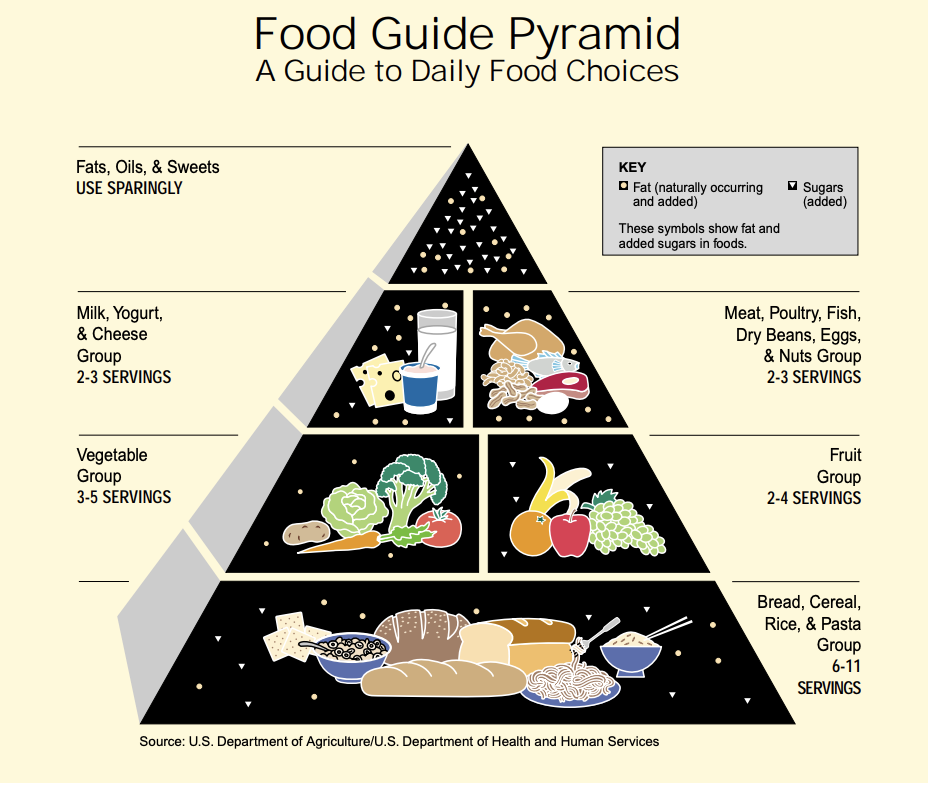
The first official DGA were released in 1980 and a variety of images and instructional graphics have been used along the way. The Food Guide Pyramid was
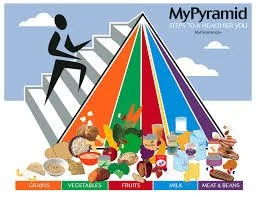
introduced in 1992 which had horizontal categories and recommended servings per day for each food group. This pyramid morphed into one known as MyPyramid with vertical food group wedges and the addition of a physical activity recommendation in 2005. It even had a companion website meant to allow individuals to learn about their own nutrition recommendations, hence the "my" in MyPyramid. From there, the pyramids were
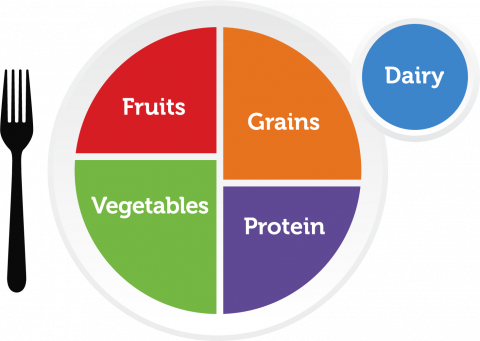
abandoned for the MyPlate in 2011, which continued to allow for personalized web use, but depicted a meal rather than a full day in it's educational image. Many in the field were fond of this shift as most people can conceptualize a meal better than an entire day of food. Last week, the newest iteration was introduced as an inverted pyramid. This was apparently meant to be a stab at previous pyramids by somehow claiming that they'd gotten it all wrong and flipping the orientation. However, in reality, much of the recommendations from the scientific report meant to influence these guidelines remained the same.
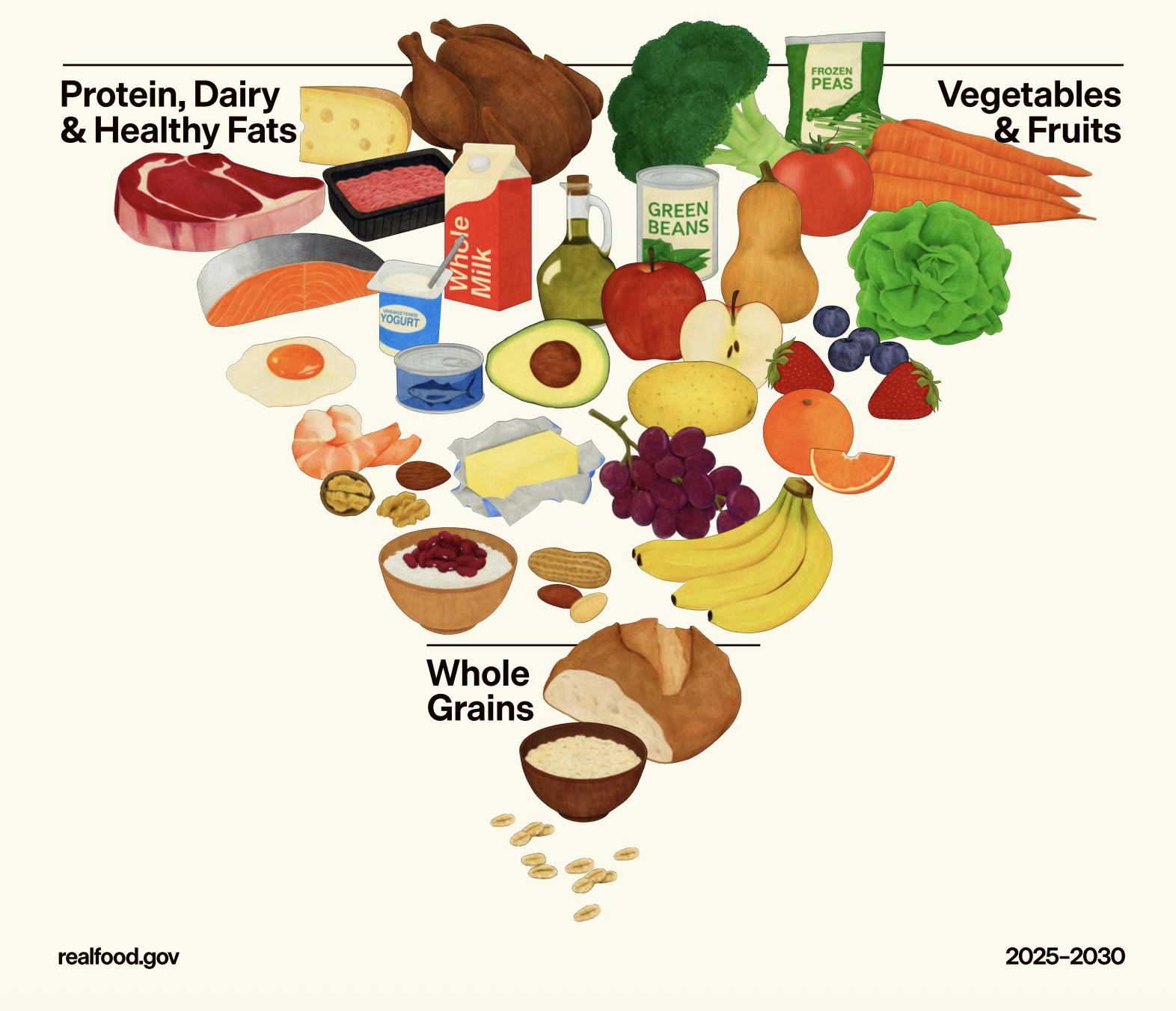
Something to know about each of these images is that they provide a mere snapshot of the recommendations highlighted in documents typically spanning hundreds of pages. And, the inverted pyramid doesn't even accurately reflect what's written in the guidelines. When comparing the written guidelines with the inverted pyramid, many discrepancies are evident. For example, if we applied the written guidelines to the new inverted pyramid, grains would actually be the largest category (as they should be). In addition, while the MyPyramid and MyPlate offered the ability to personalize recommendations a tad, this is really a public health nutrition pictographic that is not designed for personal use. Individual nutrition needs vary tremendously based on life stage, physical activity level, age, body size, and any co-occuring medical conditions.
While the DGA are not meant as individual guidance, they do inform public health programs that individuals use, such as WIC (Women, Infants and Children), SNAP (Supplemental Nutrition Assistance Program), the federal school breakfast and lunch program, childcare nutrition (such as Headstart) and food distribution programs (such as Meals on Wheels).
Below I've outlined some of what's different and what remains unchanged regarding the new DGA. If we really wanted to dig into every detail, this write-up would be far too long and way too boring!
Here's what's the same:
Fruits and vegetables are recommended to be the majority of our intake and the new guidelines continue to promote these nutrient-dense foods just as past guidelines have done.
Politics and personal interests have continued to influence the creation of the pictographic and DGA. What's reflected for public use varies from the 400+ page scientific report produced by the committee of experts in the field.
Members of the DGA committee continued to have conflicts of interest, with ties to a high protein meal replacement product and the beef, pork, and dairy industries.
Here's what's different:
This image moved whole grains to the tip of the pyramid, where it was previously given a larger section of the plate/pyramid than protein.
Protein-rich foods, such as meats, eggs, and dairy have been given larger representation than past editions.
No visual for physical activity (removed after MyPyramid).
MyPlate provided the opportunity to visualize a meal, whereas this inverted pyramid simply displays a smattering of foods (even an entire chicken!).
It's important to note that despite the many iterations of the DGA, Americans have never eaten in accordance with the recommendations set forth. This is not because we're just a rebellious, ornery bunch. Rather, our food environment does not make it easy for most people to follow the DGA. Fresh foods are more expensive, more time-consuming to prepare, and less available in many communities. With increased costs and more time-scarcity, the DGA are a just a bit out of touch with the realities of what most households can manage in order to nourish themselves. Not to mention the role diet culture contributes to nutrition confusion, which vastly impacts food decisions!
If you're an individual looking at the new inverted pyramid and wondering if you're meant to change the way you eat because of this new DGA release, I'd like you to know that my nutrition guidance has not changed with this new release. As I've outlined in previous writings, while there are certain groups of people that have higher protein needs, if you are eating an adequate, mixed diet and are not a pro athlete, chances are higher that you're getting enough protein. In addition, I disagree with the placement of whole grains at the tip of the pyramid (and science does too). Grains contain fiber, folate, zinc, iron and other essential nutrients. The carbohydrates we get from grains are essential brain and muscle fuel and should not be limited. For fruits and veggies, many of us could stand to get a tad more, but as mentioned, they can be cost- and time-prohibitive. Frozen fruits and veggies are a great option in lieu of fresh because they are just as nutrient-dense (or even more sometimes), last longer, are less expensive, and can be prepped quickly.
The best way to know that you're getting the nutrition your body needs is to meet with a registered dietitian for an assessment. Schedule a Q&A call to discuss working with a dietitian.